

Packing List
Mark all items with name. Do not bring valuables.
- Arrive well-hydrated. Begin hydrating the day before camp.
- Download the Camp App (search "Sam Houston Area Council" on Apple or Android platforms)
Paperwork
Clothing
- Socks (5 pairs)
- Shorts (5)
- T-shirts (5)
- Sweater or light jacket
- Shoes (closed-toe) or hiking boots
- Cap or hat
- Underwear (5)
- Pajamas or sleeping clothes
- Rain gear (pants and jacket)
- Swimsuit and towel
- Dirty clothes bag
- Cooling towel, highly recommended
Camping Gear
- Sleeping bag or blankets, sheet
- Pillow
- Cot, sleeping pad or air mattress (cots are available to rent at the Trading Post upon arrival); not needed if sleeping in an Adirondack)
- Flashlight and extra batteries
- Personal first aid kit
- Water bottle - marked with name (one you don't mind losing)
- Water bottle clip to attach water bottle to belt loop or backpack
- Sports drink powder packs for water bottles (not energy drinks)
- Backpack (day pack) - marked with name (one you don't mind losing)
- Insect repellent (non-aerosol)
- Mosquito netting
- Portable chair or camp stool
- Lockable storage container, recommended to keep clothes dry, available at big box stores)
*Mark all items with name. Electricity is limited.
#Bikes (non-motorized) are optional and allowed on all paved roads to access the campsites and program areas and on the marked mountain bike trail by the bike barn. There are bike racks near the climbing tower, shooting sports area, Grand Pavilion, and campsites 1 and 20. All other trails, including sidewalks and grassy areas are off-limits. Helmets, proper safety protocols, and procedures are required at all times while riding bicycles. Learn more about Bike Safety.
Don’t Bring: valuables, pets, personal firearms and ammunition, generators
 Lodging
Campsites are nestled in shaded areas throughout the camp. Every campsite has picnic tables and a covered pavilion with 2 electrical outlets. Shower houses are located along the main campsite road and are shared by three or four campsites. Individual stalls are ADA-compliant and have a toilet, shower, and sink. Parking is located next to each campsite.
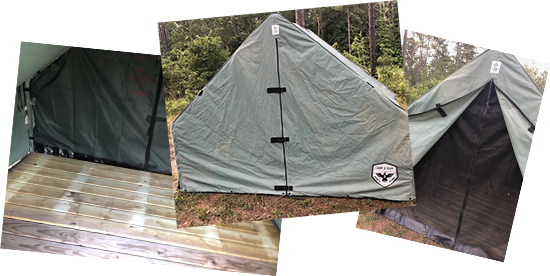
Tents: Canvas tents are available for all participants (two campers per tent) in accordance with guidelines (i.e., separate tenting for males and females; youth and adults to tent separately). Cots are available, or you can bring your own cot. Campers can bring their own personal tent.
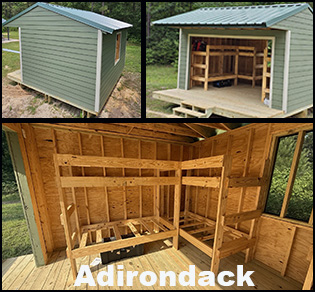 Adirondacks are available in select campsites. They sleep 8 youth, have 4 bunk beds with mattresses, and include 2 fans. A limited number of spots are available for an extra fee.
 Camp App
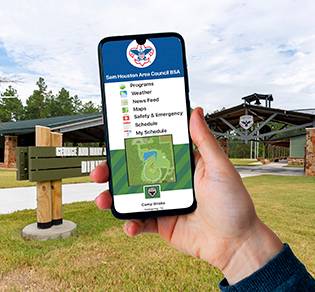
We are thrilled to introduce our brand-new camp app, which will serve as a vital communication tool for all camp attendees, offering convenient access to essential resources such as the camp map, schedule, program updates, emergency announcements, and much more. You can find it by searching "Sam Houston Area Council" on both Apple and Android platforms.
Hydration at camp
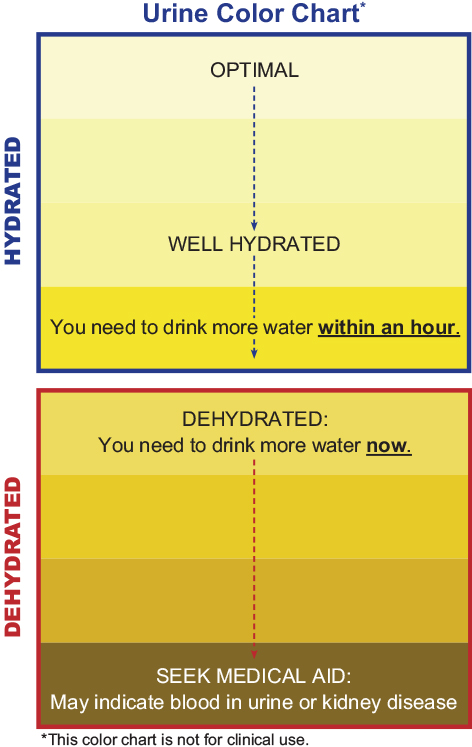 Dehydration is a major issue at camp due to campers not drinking enough water. Ensure you send a well-hydrated camper to camp; campers should begin hydrating the day before arriving at camp. Water stations are available throughout camp. Mark the camper's water bottle with their name so it can be returned if they lose it. Help prepare the camp for camp by discussing the importance of always carrying a water bottle and drinking water throughout the day.
(Source) Discuss with your camper how to monitor the color of their urine by using a urine color chart to determine if they are getting enough fluids. Show them the urine color chart and discuss the signs of dehydration, which includes:
- Increased thirst (It’s said that if you’re thirsty, it’s already too late. You’re already dehydrated.)
- Headaches or muscle cramps
- Tiredness or weakness
- Dry skin and lips
- Confusion or dizziness
- Dark urine and/or decreased urine production
(Source) In high temperatures, kids don’t sweat as much as adults do, so it’s harder for them to cool off. This makes them more susceptible to dehydration and heat exhaustion. As a guideline, when it's hot, encourage at least 4 ounces of fluid every 15-20 minutes (that's 16 oz every merit badge period). Show the camper before camp how much fluid their water bottle holds and advise them on how many water bottles they should drink every day.
Personal Possessions
Camp is an outdoor experience. A camper is cheated out of a full outdoor experience by electronic devices. Personal items such as electronic games, iPads should not be brought to camp. In all cases, personal valuables (such as watches, wallets, and money) should not be left in the open at camp. It is virtually impossible to provide security for these items. It is recommended that each unit bring a lockable storage container to secure valuables while an adult is not in the campsite. All items are to be permanently marked with the camper's name. Campers should not leave any electronic device unattended while charging anywhere at camp.
Special Accommodations
If a participant has special medical needs, such as the need for refrigeration to store medicine, please ensure that this information is included in the online registration. CPAP machines must be battery-powered, as power outlets near campsites are scarce. However, camp staff will attempt to meet reasonable requests for timely submissions made through the registration process. Participants may need to bring specialty items to help fulfill some requests.
Meals
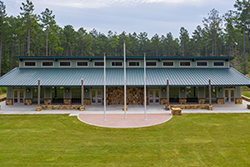 The air-conditioned dining hall seats 450 people. All meals are served in the dining hall. The dining hall features commercial gas stoves and ovens, food preparation areas, a wide selection of utensils and cooling supplies, a dry goods storage area, a dishwashing area, two walk-in refrigerators, three freezers, and additional amenities. High-quality and nutritious meals will be provided on-site by a professional custom food service company. All menus have been reviewed by a certified dietician and are designed to provide active and healthy youth and adults with the nutrition and calorie intake needed for camping.
There will be self-serve stations (e.g., salad bar, pasta bar, potato bar) at every meal. Seconds are available after everyone has been served, so there is plenty of food for everyone. Snacks are available for purchase in the Trading Post.
Special Dietary Needs
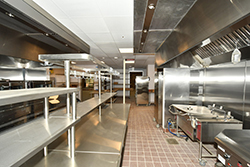 Allergies and special diets are common concerns. If a camper requires a special diet, the parent or adult participant completes a dietary form at least two weeks prior to arrival. The camp's food service providers are highly experienced in accommodating a wide range of diets; however, not all dietary requirements can be met.
The following diets can be accommodated: vegetarian, kosher, halal, no pork, no beef, gluten-free, nut-free, soy-free, dairy-free, and lactose-intolerant. Shellfish is not served at camp. The only peanut product served in the dining hall is peanut butter in the extra food bar. Not all diets can be accommodated. If the camper has a unique request, the details should be entered into the online registration system along with an email, and the food service provider will notify them if the request cannot be met.
- While at camp, campers could participate in various dining styles, including family-style dining, cafeteria-style dining, and self-serve bars.
- It is expected that all campers possess the necessary knowledge of their dietary needs and can effectively manage their food choices.
- Camp staff cannot guarantee an allergen-free environment. Careful consideration needs to be taken for campers with severe allergies, particularly those susceptible to airborne transmission.
- If a camper has a severe allergy or dietary restriction, don't hesitate to get in touch with the camp directors to discuss whether the camp staff is properly equipped to manage their needs.
- While the staff works to meet all dietary requirements, food is prepared in an area where milk, eggs, peanuts, tree nuts, wheat, soy, and fish are present, and cross-contamination may occur.
- Upon arrival at camp and prior to their first meal eaten, it is the camper's responsibility to identify themselves to the kitchen staff; then cooperate in helping the camp staff meet their need(s).
Depending on the need, campers with special dietary requirements may need to bring food items to supplement those available at camp. Participants with special dietary needs can request access to refrigerators, freezers, and microwaves to heat food; however, actual cooking must be done at the campsite.
Dietary Form
Prescription and Over-the-Counter Medication
Please review completely to ensure full compliance with regulations required by the Health Department.
All prescription and over-the-counter (OTC) medications are the responsibility of either the individual taking the medication or that individual’s parent or guardian. The following MUST be done:
- Camper and adults who require medication must have all medications listed on the Annual Health and Medical Record. Be sure to check (Yes or No) on Part B2 of the Annual Health and Medical Record whether non-prescription medications (e.g., acetaminophen, antibiotic ointment, antacids, antihistamine, hydrocortisone cream) can be administered at camp.
- Send enough of the medication in sufficient quantities in the original container to last throughout camp, but only send the amount of medication needed at camp. If requested, most pharmacists will provide a second labeled container for medications so only the needed prescription can be sent to camp and the remainder can be kept at home in a labeled container.
- Medication must be in the original container with the prescription label. Daily pill containers are not acceptable.
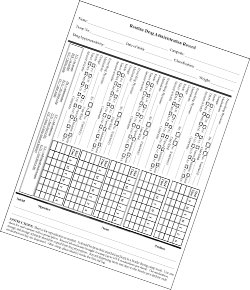 Place all medications in a zip-lock-type plastic bag with the camper’s name on it.
 - A Routine Drug Administration Record must be filled out by the unit leader when medications are dispensed at camp and then turned in to HQ at the end of the week.
- All information on administration, including any specialized equipment or medication (e.g., insulin injections, insulin pumps, and emergency medications) should be provided by parents/guardians to unit leaders.
- Campers should not stop taking any maintenance medications unless instructed to do so by their doctor.
- During camp, all medications must be placed in a lockable storage or other secure location that is not accessible to campers. If a medication needs to be refrigerated, contact the camp health officer.
- Ensure medications are not expired, including inhalers and EpiPens.
- Emergency medications (asthma inhalers or epinephrine auto-injectors) that may be needed for an emergency or on an urgent basis may be carried by the youth participant. A buddy or a responsible adult should be sure the youth has the emergency medication. • Youth need to know how to use the medications. • The youth participant must notify the adult leader immediately upon self-administering the emergency medication. • In many cases, an evaluation or further treatment by a healthcare provider may be needed after the use of some emergency medications, e.g., epinephrine, even if the youth member feels OK. It may also be necessary to obtain an additional supply if no additional doses are available. • Planning should address how the emergency medication will be administered and include how to develop the adult leader’s comfort in assisting the youth if necessary. • The parent or guardian should be notified of the use of emergency medication.
- If permission to administer over-the-counter (OTC) medications is not checked on the medical form, medical personnel must attempt to contact the parent or guardian for permission to administer such medications (e.g., Tylenol, Pepto-Bismol). If the health and safety staff is unable to reach a parent/guardian, the camper will need further medical evaluation by the designated camp physician or a hospital facility.
- Resources:
• Routine Drug Administration Record
• Medication Use
• Safe Use of Medication
Annual Health and Medical Record
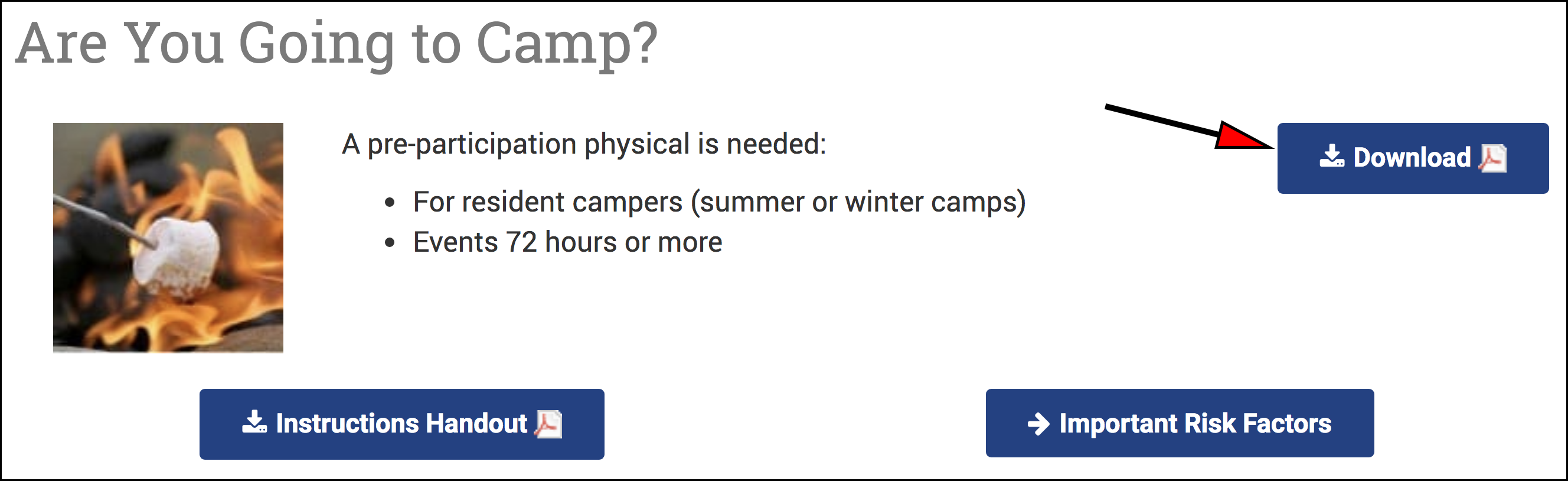 All persons attending, whether youth or adult and regardless of the amount of time spent in camp, must have a completed Annual Health and Medical Record (AHMR) consisting of Parts A, B, and C. The form must be completed in its entirety and must contain all applicable signatures. Downloaded forms must be completely filled out and signed by a physician and a parent/guardian (Scout if under 18).
Please carefully review all Annual Health and Medical Records prior to check-in. Common errors made on the Annual Health and Medical Record:
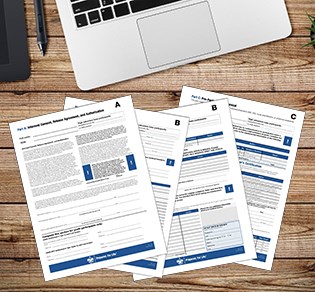 Part A - Consent to Treat. Ensure the form is signed and dated by adult participants or the parent of camper under age 18. All signatures must be dated on or after 12/1/2023. Digital signatures must contain the proper digital information; cutting and pasting is not allowed. Authorization for a camper to leave camp with an adult is at the bottom of the page.
- Part B1 - Contact Information and Health History. Emergency contact information should be complete and include phone numbers. The health history should be complete with all lines marked either Yes or No. In order to be able to treat youth in camp for more than immediate life-threatening conditions, our medical staff must have signed consent of a parent or guardian of a youth as contained in Part B. Also, adults who cannot otherwise consent due to incapacity must have signed this page in order for our medical staff to provide more than stabilization treatment.
- Part B2 - Allergies, Medications, and Immunizations. List allergies to food, plants, medications, and insects on the form. If an EpiPen needs to be carried by the camper, it MUST be noted on the form. Any medication taken regularly should be listed. If the parent/adult guardian authorizes Over-the-Counter medication (OTC) to be given, the line must be signed, dated, and checked “Yes”.Complete the form rather than attaching an immunization record. Immunizations – currently requires only the Tetanus immunization, and it (or updated boosters) must have been received within the last 10 years. A check of “Yes” and the latest date must be listed. The Texas Department of Health will not accept “Up-to-Date,” “Current,” or “On-file.” Please do not attach shot records to the AHMR.
- Part B2 - Non-prescription medications. Ensure the non-prescription medication question is checked (Yes or No) on Part B2 of the medical record whether non-prescription medications (e.g., acetaminophen, antibiotic ointment, antacids, antihistamine, hydrocortisone cream) can be administered at camp. If the option to allow non-prescription medication is not checked, then it will be necessary for the unit leader of camp medical officer to attempt to contact the parent or guardian for permission to administer such medications. If they are unable to reach a parent/guardian, then the camper will need further medical evaluation by the designated camp physician or hospital facility.
- Part C - Pre-participation Physical. All participants must complete a pre-participation physical on or after December 1, 2023. The form must be signed/dated by the health professional. Ensure that the healthcare provider completing Part C dates the form when signing.
- Do not provide original forms. While the camp staff will try to return forms, it is best to provide copies. The forms are destroyed after camp.
 Digital signatures (or e-signatures) must be backed by an Adobe digital certificate. Approved digital signatures will have a certificate-based signature box (similar to the example on the right) on the signature line. Altered forms with signatures in a script font are not allowed.
- FAQs about the Annual Health and Medical Record
- Read about important medical risk factors
ATV Program
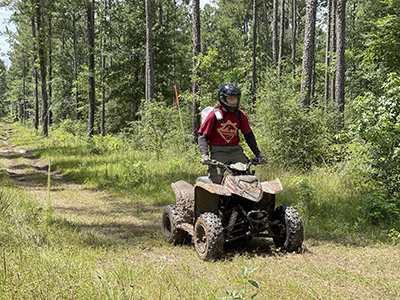 The ATV Program is optional and offers certified safety training and off-road adventures for youth (ages 14+), teaching safe operation and ASI certification.
The ATV program allows participants to learn how to properly ride all-terrain vehicles (ATV) and explore Camp Strake's trails while learning to drive the crème de la crème of ATV equipment. Participants also receive safety instruction vetted by a company with 60 years of industry expertise. long-sleeve
For ATV riding, participants must bring:
- Long-sleeve and long pants
- ankle-high boots
- ATV Consent Form (signed by a parent/guardian)
- Complete the ATV Safety Institute E-Course online before camp. There is no charge to take the 1-2.5 hour course (direct link).
- Other items recommended: ATV face mask, riding gloves, head bandana, and a bag to carry muddy clothes.
Youth Leaving and Returning
Parents are encouraged to allow the camper to stay at camp for the entire week. This reduces unnecessary traffic in and out of camp, allowing youth to have the complete camp experience. Youth will only be allowed to check out from camp prior to final checkout by an adult authorized on Part B of the Annual Health and Medical Record. Only people listed will be allowed to remove the child from camp.
Lost and Found
If any lost items are found, they should be turned in at the camp commissioner’s office in HQ as soon as is reasonably possible. Lost items will be kept in the camp commissioner’s office through the end of camp. After camp, the camp director will dispose of the items left at camp (e.g., donating them to a non-profit organization, returning them to the council office, or disposing of them in the trash). Neither the council nor its staff shall be held responsible for any lost items.
Do not bring valuables to camp. To assist in returning items to their rightful owner, please ensure that all items brought to camp have the owner’s name marked on them.
Trading Post
The trading post, located in the camp headquarters building, is stocked with t-shirts, camp patches, mugs, camping equipment, cold drinks, ice cream, and candy. The trading posts accept cash, checks, and credit cards (Master Card, Visa, American Express, and Discover).
Illegal Substances
Smoking or vaping by youth will not be tolerated. If a youth is caught smoking at camp, the youth’s parents or guardians will be contacted by phone and shall be required to pick the youth up from camp immediately. The consumption, possession, or use of alcohol, illegal drugs, or controlled substances at camp is not permitted. All local, state, and federal laws will be followed when a violation involving the above substances is reported. Violators will be asked to leave the camp immediately.
Photographs
Notice! Please be advised that promotional videotaping, photography, and drone photography may be in progress at any time during an event. Your entrance constitutes your agreement that the district has the right to reproduce your likeness in videography and photography for promotional purposes (e.g., publications, internet, newspapers).

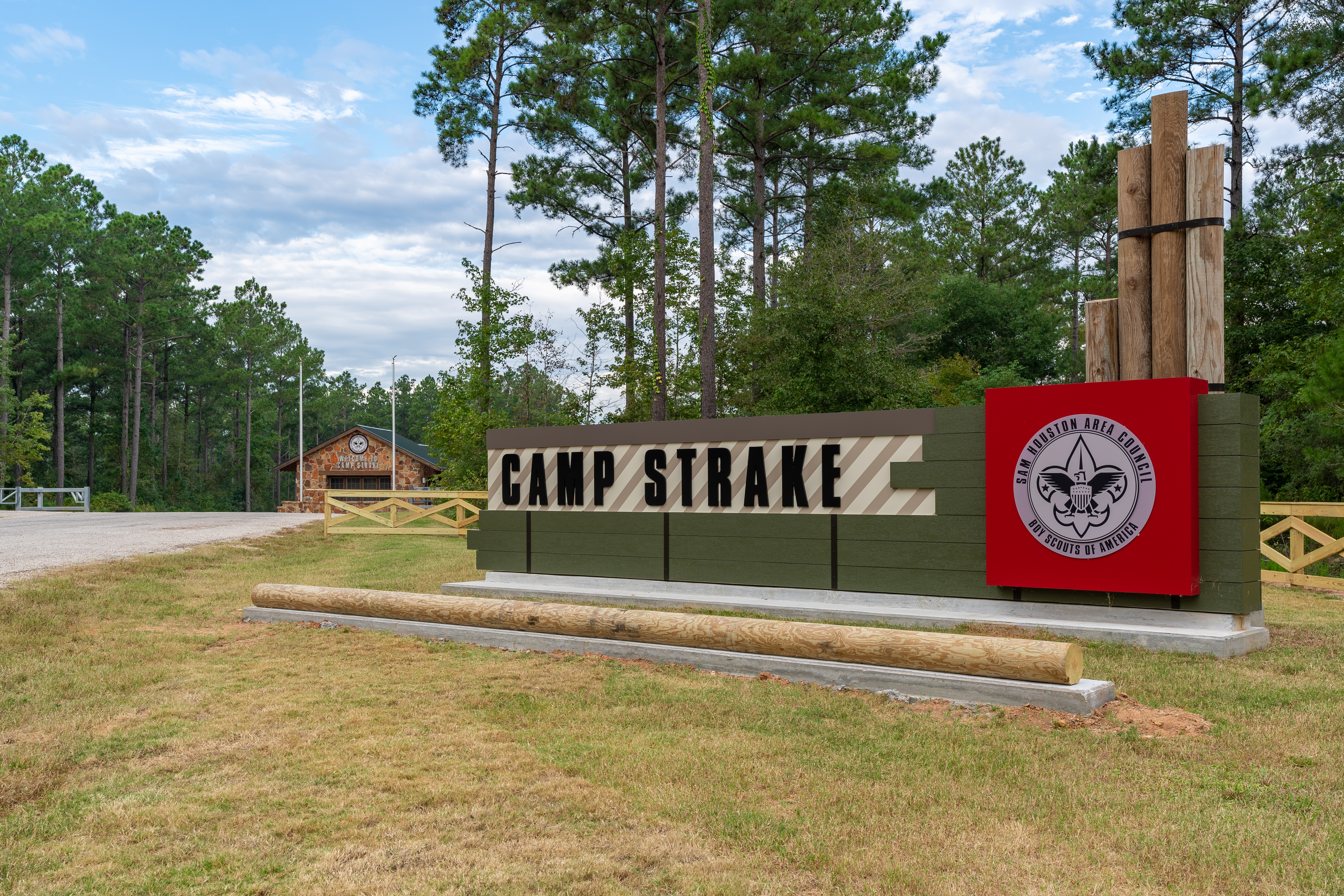
Camp Strake is located on 2,816 acres between New Waverly and Coldspring near the community of Evergreen, Tx. Lake Livingston is 10 miles east of the property. The camp is a 1.5-hour drive from downtown Houston and close to I-45 and the Grand Parkway. Camp Strake is surrounded on three sides by the Sam Houston National Forest and has the Lone Star Hiking Trail close to one corner of the property.
Camp Strake is situated on 2,816 acres and is surrounded on three sides by the Sam Houston National Forest, with the Lone Star Hiking Trail located near one corner of the property. There are 20 campsites with pavilions, an air-conditioned dining hall, a STEM (Science, Technology, Engineering, Math) center, a 28-acre lake, an aquatics center with a swimming pool and pool house, extensive trail system, sports fields, shooting sports complex, climbing and rappelling tower, high-ropes course, COPE course, and more. The camp has been designed and built to meet ADA requirements.
Camp Map Google Map
Camp Safety
The council remains committed to delivering a safe, fun, and meaningful outdoor experience for campers and families throughout the summer camping season and beyond. In response to the passage of the Texas Youth CAMPER Act, the Heaven’s 27 Camp Safety Act, and Texas Health and Safety Code §141.0091, camp leadership and staff work diligently to not only meet but exceed the enhanced safety standards established by the State of Texas.
Although all developed areas within Camp Strake are located outside National Flood Insurance Program (NFIP) flood zones, the camp has several major safety enhancements, including:
- State-of-the-art emergency notification system
- Automated lightning detection and alert technology
- Automated severe weather notification systems
- State-approved Emergency Action Plan
SHAC's Commitment to Safety is ongoing, and the safety of our youth, volunteers, staff, and employees cannot be compromised. The camp staff puts the utmost importance on safe and healthy environments and takes great strides to ensure the safety of its youth as well as the adult volunteer leadership that interacts with them.
To protect the health and safety of youth attending residential camps in the State of Texas, the Texas legislature has enacted the Texas Youth Camp Safety and Health Act, which requires the council to conduct a criminal background check and a sex offender database check on every adult who will be at camp. All participants must follow youth protection guidelines at all events. Highlights include:
- Two-deep leadership on all outings is required.
- One-on-one contact between adults and youth members is prohibited.
- The buddy system should be used at all times.
- Discipline must be constructive.
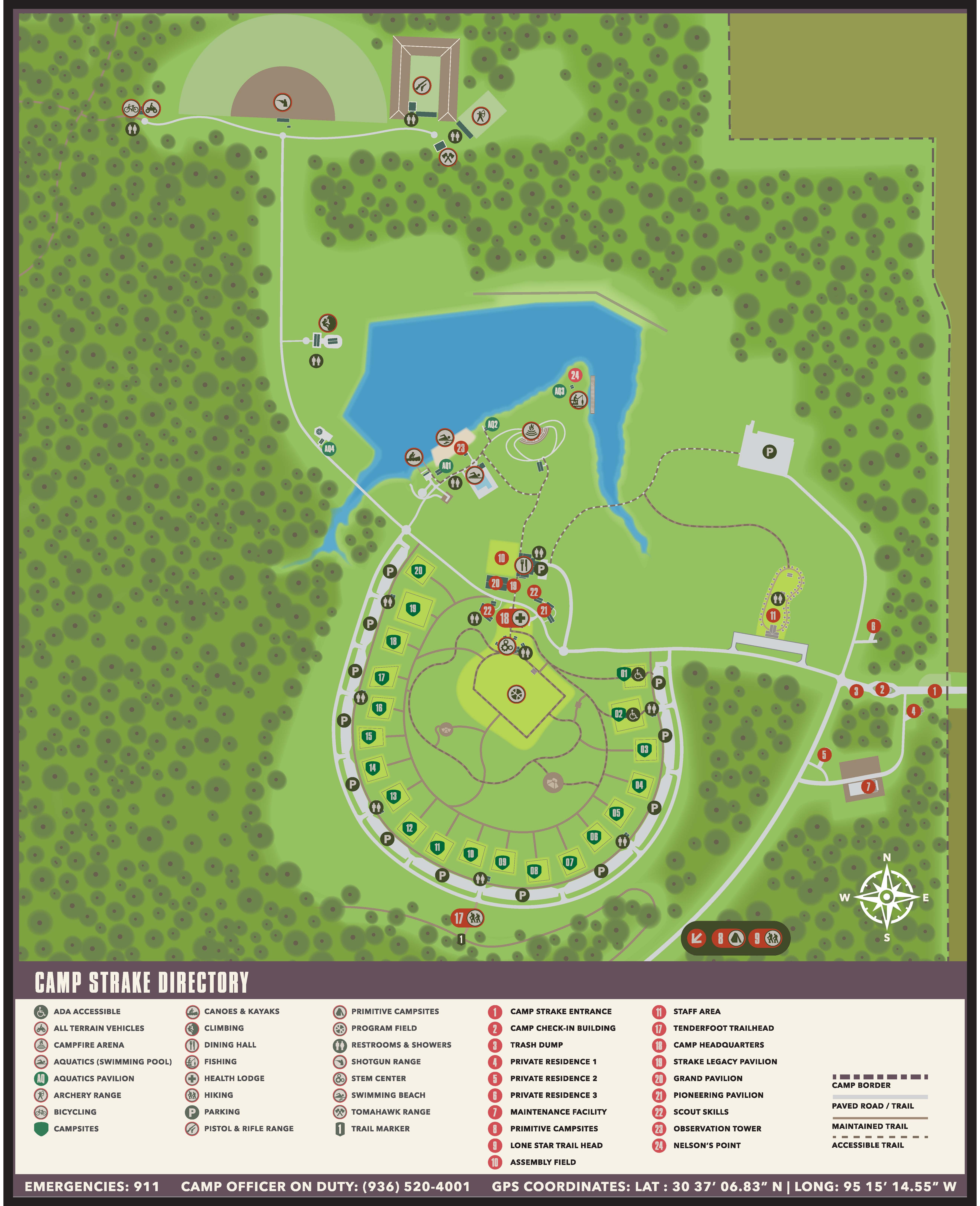
Google Map of Camp Strake
Click on the icon ( ) in the upper right-hand corner to make the map full screen.
Facilities and Program Areas
- 20 campsites with pavilions
- Air-conditioned dining hall (450-person capacity)
- Camp Headquarters building
- STEM (Science, Technology, Engineering, Math) center
- Program pavilions
- Extensive trail system
- Arena for 1,200 people
- Modern restrooms and shower houses
|
- Aquatics Center with a swimming pool and pool house
- Aquatics Center on the lake with observation deck and canoe storage
- Cool Zone, an interactive water feature with fountains, and sprays
- Shooting Sports Complex with rifle, shotgun, and archery range, including a sporting arrows course
- Bikes and all-terrain vehicle ATV area
- Climbing and rappelling tower
- Aerial Adventure Program (High Rope Elements)
- Sport fields
- Zipline
|
Camp Strake Facilities
All facilities at Camp Strake are ADA-compliant. Many of these facilities, including the dining hall, are air-conditioned.
Check-in Building
At the entrance to Camp Strake is the check-in building. This facility is used to greet visitors, provide directions, and issue parking permits. All visitors should be prepared to stop at this building to sign-in.
Camp Headquarters
Camp headquarters houses the camp phone, lost and found, mail, offices, quartermaster, trading post, health lodge, and a training room.
Dining Hall
The dining hall seats 460 people. High quality and nutritious meals are provided by a professional service. The parade field on the west side of the dining hall is used for flag ceremonies.
Campsites
Campsites are nestled in shaded areas throughout the camp. Every campsite has picnic tables, a covered pavilion with electricity. Shower houses are located along the main campsite road and are shared by three or four campsites. Individual stalls are ADA-compliant and have a toilet, shower, and sink.
STEM
The STEM (science, technology, engineering, math) building is in the program area just south of the administration building. The building is outfitted with equipment and materials to support a robust STEM and conservation program.
Aquatics
The aquatics area contains a pool, fishing area, beachfront with lake swimming area, and boating area to support the full range of aquatics related merit badges. The 28-acre lake provides a venue for canoeing, kayaking, and paddleboarding. A portion of the lake is reserved for conservation and fishing activities.
Shooting Sports
The shooting sports area contains a rifle range with 16 firing positions and a maximum range of 100 yards, a shotgun range, archery range, sporting arrows range, and 3D archery range.
Climbing / High Ropes Course
The 32-foot-tall climbing tower and training pavilion is located at the west end of the lake. The top of the tower has a great vantage point overlooking the entire camp. The tower is designed to allow beginner and experienced climbers to test and improve their skills. The high adventure program will also include a zipline and ATV program.
Staff Area
The staff area is west of the check-in building and contains a main staff building that includes office, storage, laundry, and meeting facilities. Adjacent to this building is 40 two-person huts and a shower/latrine facility.
